Best Dsw For Mac
There are so many options when choosing a Digital Audio Workstation (DAW) and purchasing the one that’s right for you can prove to be a daunting task. Having gained experience using virtually every DAW over the past two decades, I can honestly say that there is no objectively best choice.
These days, virtually every top DAW is cross-compatible on both Windows and Mac Yet for some reason, Sonar is a Windows only program. PC lovers might not care, yet no one can argue that a HUGE percentage of musicians are Mac users. And if you EVER plan to collaborate with any of themSonar is probably NOT your best option. All these best free Mac digital audio workstations or DAW are best in the industry and our team has reviewed thoroughly to present this list for you. When it comes to best free Mac digital audio workstations, you can blindly trust MuLab. Developed by a small company called MuTools which is based in Denmark.
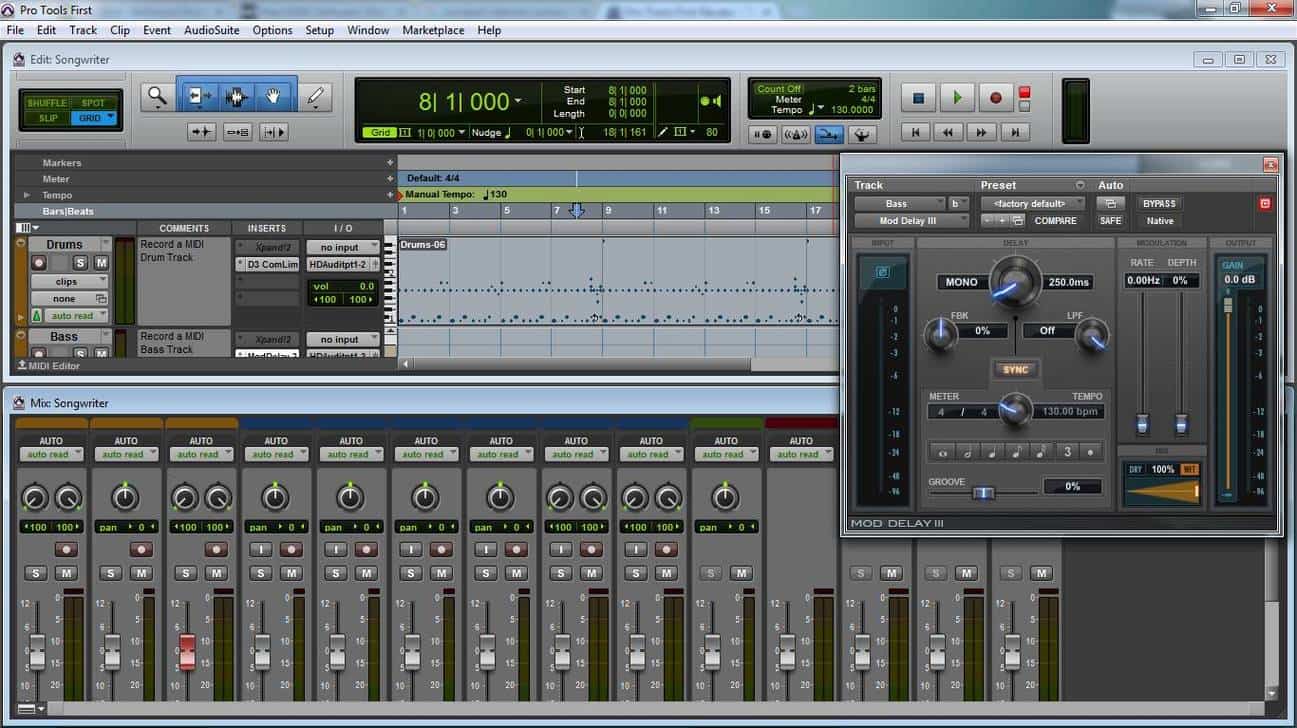
There are subtle, and not-so-subtle differences in appearance, workflow and stock capabilities between each of them, and the goal in choosing a DAW is finding one that you feel comfortable with and trust. Hopefully, this overview of the many DAWs currently available on the market can help you make informed decisions if you’re thinking of purchasing a DAW. Most of my audio work is in recording, editing and mixing for music. Because of this, Pro Tools is the DAW that I use the most and am the most comfortable with. I would go as far as saying that if you hope to have a career in audio that Pro Tools is the one DAW that is a must-own.
Most professional studios I’ve worked out of or have visited use Pro Tools as their main DAW, with very few exceptions. There’s something to be said about the concept of an “Industry Standard”, and while many of the DAWs that I will cover later in this article are superior to Pro Tools in certain ways, Pro Tools handles enough tasks extremely well to have become the Industry Standard.
Because of this, Pro Tools is compatible with most modern software (plugins, virtual instruments) and hardware (interfaces and controllers, etc.) Pro Tools — originally called, is now available in three formats: (a good starting point for beginners), (a great choice for most home studios), and (which you’ll find in commercial and professional studios). My home studio setup is based around an iMac with 32GB of RAM and Pro Tools, and can easily handle sessions with over 130 tracks, with dozens of process-intensive plugins. Although Pro Tools has evolved a lot over the decades, it still leaves much to be desired in terms of advanced features and stock capabilities. Regardless, chances are Pro Tools was used in some capacity during the creation of your favorite modern movie, television show or album. Many of the world’s greatest and most decorated audio engineers use Pro Tools, across a wide variety of mediums. It’s not the most elegant, versatile, or cutting-edge software, but I truly believe that if you, Pro Tools is the DAW to own.
Common Uses: Music Recording, Production, Editing, Mixing & Mastering; Sound Effects Recording, Editing & Mixing for Post-Production; Recording for Broadcast and Live Event Production. Favorite Feature: While Pro Tools is a pretty straightforward workhorse DAW, I must say that the workflow is second to none — the and user interface are intuitive as they come, and I believe that this is a big part of why it has become the industry standard.
Comes installed on Mac OS 10.3 or later, and allows you to verify your hard disk or repair permissions by clicking on your hard drive and then clicking on the 'Repair Disk Permissions' button. Every Mac user should make sure he runs three basic maintenance tasks: • 'Cron' scripts: Mac OS X is a UNIX operating system, and there are 'cron' scripts that clean up messy log files, optimize certain parts of the system, and accounts for user activity. The following are essential utilities for keeping your Mac running smoothly and for fixing little problems that may crop up (Click the links to go to their download sites): • • • Running the Above Programs. Help for slow macbook. If your Mac is more than five years old, however, you might want to consider purchasing a new one, especially if you're running newer applications or the latest version of Mac OS X.
Pros: • Regular updates • Relatively easy to learn • Found in most studios and easy to find tutorials and other educational content • Many high-end configurations available Cons: • Not as forward-thinking as other DAWs • Inferior MIDI editing • More powerful versions and hardware are expensive While I personally have never fallen in love with Logic the way that many musicians, producers and engineers have, it is a very deep and powerful piece of software that benefits from a slick yet playful aesthetic, and a wealth of features and sounds straight out-of-the-box. For composers and producers in need of a DAW for the purpose of recording temp or demo tracks, Logic is arguably in the top tier.
Are of high-quality, both in look and sound, and would serve any very well. The MIDI editing is solid, and there are a wealth of features that make it a great choice for any type of production and mixing. To me, the shortcuts and layout of Logic have always left something to be desired. I’ve never gotten to the point where I can execute warp-speed wizardry the way I can with Pro Tools, but that’s partly because I ‘grew up’ using Pro Tools, so to speak. If you’re looking to purchase a DAW specifically for music production, composition and beat-making, I’d venture to say that Logic is superior to Pro Tools.