Problems Importing Csv Outlook For Mac
Many users have contact data stored in Excel workbooks or created calendar events in Excel to take advantage of formulas and fill features when creating a large number of events. It's very easy to move the data to Outlook. As with any database, you will need to name the columns your data is in. You can either use whatever name you want and map it to Outlook fields or export to Excel format and delete the data from the workbook and enter your data. You'll also need to name the used range of cells in Excel. Save Excel Worksheet If you are importing all of the data in the worksheet, save the workbook in CSV format.
Import Contacts from Excel or a CSV File into Outlook. You can export your Gmail contacts to a CSV file, for example, for importing into Outlook. How to Import macOS Contacts Into Outlook for Mac. 50 Most Popular Outlook Tips, Tricks and Secrets. How to Export Your AOL Mail Contacts Now. Address Book can read these files and will help automate the import process. Excel on your Mac, you can use any computer with Excel to create the CSV file. [Outlook Emails] How to Export Outlook Emails to Excel Spreadsheets.
This is the easiest way for most users to import an Excel worksheet trouble-free and we recommend using CSV format when possible. • Save the workbook as Comma Separated Values (CSV). • Close Excel. If you have data in cells that you are not going to import, create a named range: • Select your used data range and type a name in the field to the left of the address bar. (Include the field names in your selection.) • Press Enter. • Save the workbook as an Excel 97-2003 workbook.

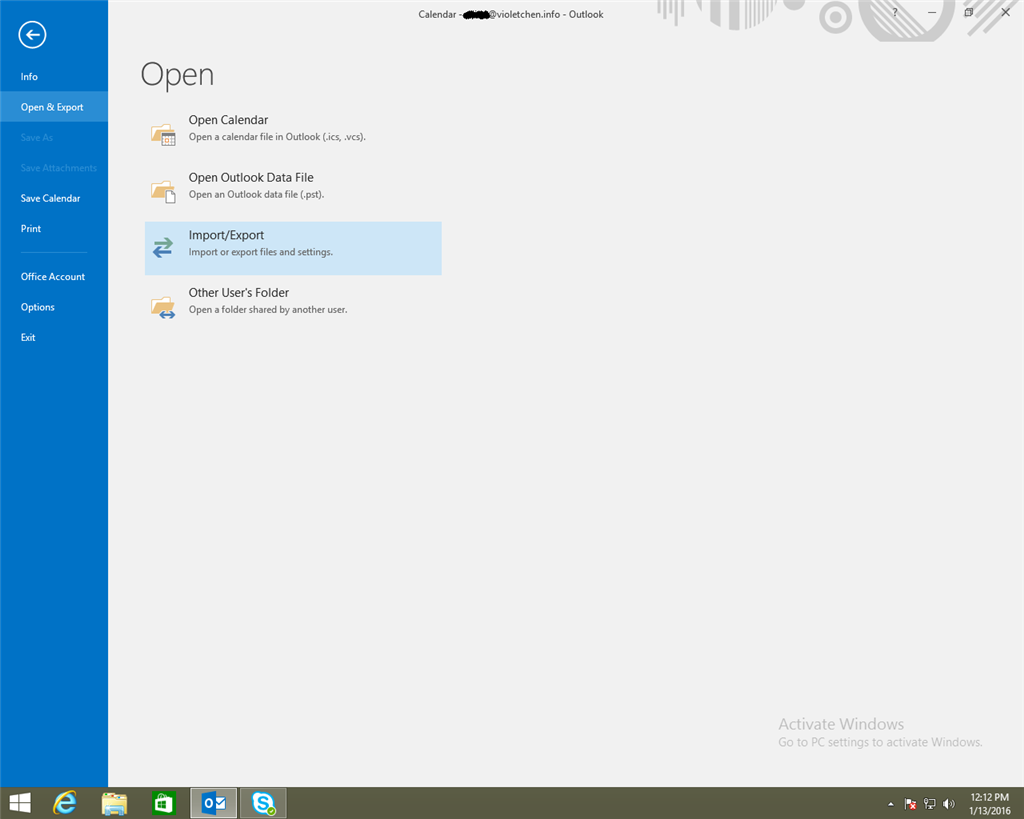
• Close Excel. Import into Outlook • Go to File, Import and Export • Select Import from a file • Choose Microsoft Excel as the source • Browse to the workbook file.
• Select the Calendar (or Contact) folder. • Select the named range. If you export to Excel to get the field names, you'll see two named ranges when you import. Just make sure you select the correct named range. • If you aren't using the field names that Outlook uses, you'll need to map your fields to Outlook's fields. • Press Next when ready and finish the import.
I have windows 8 a 250gb partition and the rest is for the Mac OS X. I followed the instructions and downloaded all the drivers from a USB to the windows partition. I have the boot camp control in the system tray but I can't seem to view my Mac partition in explorer. As of now I just want to be able to view the mac partition and pull files from it. How to view windows file bootcamp for the mac os x. Write to Windows NTFS Partitions From OS X. Your Windows partition appears under Devices as BOOTCAMP on Mac OS X. Unfortunately, Mac OS X can only read this partition out of the box, not write to it. There are quite a few solutions for writing to NTFS file systems on a Mac, many of which are paid applications.
Tips: • Outlook 2013 and up can only save as a CSV file. • Outlook 2007 uses the Excel 97-2003 *.xls format, not the Excel 2007 *.xlsx file format • You can import calendar data into any calendar folder in any *.pst or your mailbox. • You cannot import into a public folder calendar or secondary Exchange mailbox. To import into either, create a calendar folder for the import and move the appointments after the import.
• Use these same steps with Contacts, choosing a Contacts folder (obviously) • If you drop a field on the wrong Outlook field, drop it again on the correct field and Outlook will remove it from the other field. Video Tutorial. Hello Diane, My case might be a little too peculiar, and I will briefly describe what I want to do. I want to add JUST Notes to my existing contacts, i.e. Last checked date, a secondary web site, etc. Uploading them from an CSV file. Mapping fields and everything else it is just fine, However, when Importing the file and picking either 'Allow duplicates, Replace Duplicates or Do Not Import Duplicates' I pick the option shown in your video indeed, it duplicate the items, it does NOT update them.
I know it would be best if I download them, edit them in excel, save as CSV and upload the file. However Outlook 2013 has this annoying bug, that even when I select the option 'File As' First Name, Last Name' still uploads the info as 'Last Name, First Name'.