How To Change File Name For Excel Document Saved On Desktop Mac
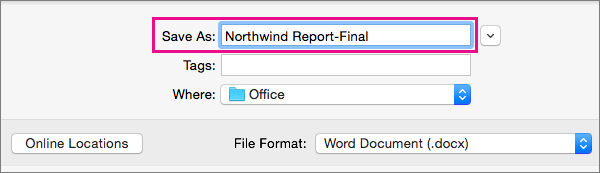
In Word and PowerPoint: Open any file or create a new file. On the File menu, click Save As. Click Options, and then on the Save [Program] files as pop-up menu, click the file format that you want. Mar 18, 2010 - If you right-click (or control+click) on a file name in the Finder of modern. How to Batch Rename Files on Mac OS X Easily from Finder.
Jim Elkins is in a pickle. Since updating his Mac, he can’t save files via Save As. I get the message: “The document could not be exported as ‘name.’ You do not have permission.” There are two ways to work through this problem: one doesn’t require restarting, so I recommend that one first, of course! You need to fix permissions in your Home directory with an extra Terminal step at the end., but here’s a recap: • In the Finder, choose Go > Home.
Gbc emulator android. So you what you see? Share the LOVE! Emulators » Nintendo Game Boy Color. Choose the platform you want to emulate on: Android. Community Emuparadise Forums Emuparadise Chat Links & Downloads Join us on facebook Follow us on Twitter! Gaming Game Servers Play in Browser EP Reviews Section Video Game Betas Translation Patches Official Console SDKs Emulation Extras Pokemon ROMs Music MP3 Soundtracks High Quality (FLAC) Native (NSF/PSF/SPC) Sheet Music Video Movies.
• Select File > Get Info. • In the Sharing & Permissions section, click the Action (gear) icon and choose Apply To Enclosed Items. (If the Sharing & Permissions section isn’t showing, click its triangle.
If the gear is grayed out, click the lock icon and enter an administrative password.) • Click OK to confirm, and a progress bar will appear if it takes more than a few seconds. • When complete, launch Applications > Utilities > Terminal. • In Terminal, enter the follow and press return: diskutil resetUserPermissions / `id -u` • Apple says if that command fails with an error, enter the following and press return and then follow step 6 again: chflags -R nouchg ~ If that doesn't solve the problem, you have a second option, which requires a restart so you can invoke it from Recovery: The Reset Password option in Recovery mode lets you fix permissions associated with your home directory. • Select > Restart.

• After the Mac shuts down and makes the startup chime, immediately hold down Command-R to boot into Recovery mode. • After the Recovery screen appears, select the menu item Utilties > Terminal. • Type resetpassword and press Return. Don’t worry: this won’t reset your password. • A dialog appears from which you can select your startup volume if it’s not selected by default. • Pick your username from the Select the User Account dropdown menu.
• In the lower-right corner of the screen, click Reset next to the Reset Home Directory Permissions and ACLs area. • Now choose File > Quit, and then in the main Recovery window, choose > Restart. When your system comes back up with your OS X installation, this problem should be resolved. Ask Mac 911 We’re always looking for problems to solve! Email yours to including screen captures as appropriate. Mac 911 cannot reply to email with troubleshooting advice nor can we publish answers to every question.