Best Battery Backup For Mac
A cheap power strip might protect equipment from power surges, but it does nothing to help when the power goes out and your system comes to a halting crash. For that, you’ll want a battery backup, also known as an uninterruptible power supply (or UPS). Editor’s Note: Don’t want to read everything?
On the Excel menu, click Preferences. Under Formulas and Lists, click Calculation, and then under Iteration, select the Limit iteration check box. In the Maximum iterations box, type the number of iterations that you want to set as the maximum number of times Excel recalculates. How to allow iteration calculations in excel for mac free.
Currently, the best external battery pack is the Anker PowerCore 26800. Wiki researchers have been writing reviews of the latest external battery chargers since 2015. Apr 04, 2009 Hi. I've been looking for a battery backup for my iPhone 3G. My price range is about $70 or lower, unless there is an amazing product for like $5 or $10 more.
You can’t go wrong with this. It’s the one that we use here at the How-To Geek office, and while you can get something slightly cheaper if you shop around, you do get what you pay for and the cost difference isn’t much. Online yugioh games for mac. What Is an Uninterruptible Power Supply? Sudden loss of power and power surges are two of the principle causes of damage to computers and other sensitive electronics.
Even cheap power strips will do a decent enough job protecting against the power surges, but they offer no protection against drops in line voltage, brownouts, blackouts, and other power supply issues. In order to protect your computer against power supply interruptions, you need a battery backup. UPS units are like power strips that contain a big battery inside, providing a buffer against power supply interruptions. This buffer can range from a few minutes to an hour or more depending on the size of the unit.
A simple way to think about the utility of a UPS unit is to think about working on a laptop. You’re at home, your laptop is plugged into an appropriate surge protection strip, and you’re busily finishing up some reports for work. A summer storm knocks the power out. Although the lights go out, your work on the notebook computer is uninterrupted because the notebook switched over to battery power seamlessly when the flow of electricity from the power cord vanished. You now have plenty of time to save your work and gracefully shut down your machine. Desktop computers, however, don’t have batteries built-in, like laptops do. If you had been working on a desktop during that power outage, the system would come to an immediate halt.
Not only would you lose your work, but the process imposes unnecessary stress on your machine. In all our years of working with computers, the vast majority of hardware failures can be directly attributed to the stress hardware components experience during the shut down and startup process (especially if power surges or blackouts are involved). A UPS unit would, at minimum even with a very small unit, provide a window of time where your computer could be gracefully shut down or sent into hibernation mode and brought back online once the power outage or other power situation was resolved.
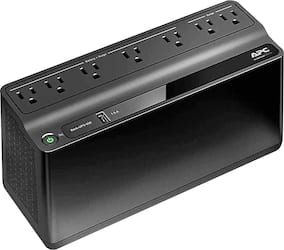
If the situation is resolved while the UPS unit still has enough battery life remaining, then you can work right through the storm without interruption. Even if you’re not sitting right in front of the computer, many UPS units come with software that can detect when the unit switches to battery power, and shut down automatically (and properly) in your absence. If that’s enough to convince you, read on as we guide you through identifying your UPS needs, calculating your UPS power requirements, and understanding the features and design types of various UPS units.
Where Do I Need UPS Units in My House? The UPS market is a very diverse one. You can find tiny desktop units designed to keep a lightweight desktop computer running for 10 minutes, or walk-in-freezer sized units deployed in data centers to keep an entire bank of servers running through a storm.
As such, it’s possible to spend anywhere from a hundred bucks on a low-end UPS unit to thousands. The most important step in your UPS selection and shopping process is to sit down and chart out your power needs before spending your hard earned cash on gear that is overkill (or worse, underpowered) for your situation. First, think about all the systems in your home or office that need the extended power protection supplied by a UPS unit, to stay online in the event of power outages, or both. Every reader will have a different setup, for the sake of example, we’re going to use our home as a template to help you think about all the varied power needs found in a typical residential setting. The most obvious system would be your desktop computer.